What hair color suits my skin tone?
Two people can get the exact same blonde and end up with opposite results: it brightens one and leaves the other looking pale or tired. The difference is rarely the dye. It's the skin, and more precisely your skin's undertone and the contrast between your skin, eyes and hair.
This guide shows you how to find your undertone with three quick tests at home, then lists the colors that tend to suit each skin type. Treat them as guidelines, not rules: in the end, what matters is how the color looks on you.
Skin tone vs. undertone
- Skin tone is how light or deep your skin is: very fair, fair, medium, olive or tan, deep. It can change with the sun.
- Undertone is the hue underneath, and it doesn't change: warm (golden, peachy), cool (pink, bluish) or neutral (a mix).
There is warm fair skin and cool deep skin. That's why "I'm fair" or "I'm tan" isn't enough: undertone has the biggest say in which hair colors flatter you.
Three tests to find your undertone
Do them in natural light, near a window, without makeup.
- Wrist veins. Greenish veins usually mean warm. Blue or purple veins mean cool. A mix, or you can't tell, likely means neutral.
- Gold or silver. Hold a gold piece of jewelry near your face, then a silver one. If gold lights you up, lean warm; if silver looks better, lean cool; if both work, neutral.
- White paper. Hold a white sheet next to your face in the mirror. Next to it, warm skin looks more yellow or golden, cool skin more pink, and neutral neither.
If two out of three tests agree, you have a solid clue.
Colors that tend to suit each undertone
Warm undertone. Look for golden, copper or caramel reflections:
- Honey and golden blonde.
- Caramel balayage.
- Warm chocolate brown.
- Copper red and mahogany.
Very ashy or icy platinum blondes can make warm skin look grayish.
Cool undertone. Look for beige, ash, rosy or bluish tones:
- Platinum and ash blonde.
- Cool brown.
- Jet black and midnight blue.
- Pastel pink, lavender and rose gold.
Very orange coppers can bring out redness in cool skin.
Neutral undertone. You have the most room to play and can move between warm and cool. In-between shades such as chocolate brown, soft honey blonde or rose gold work especially well.
Contrast matters too
Beyond undertone, look at the natural contrast between your skin, eyes and brows:
- High contrast (for example, fair skin with dark hair and brows): you can usually carry bold, defined colors like jet black, mahogany or platinum.
- Low contrast (skin, eyes and hair in similar tones): soft colors and blends, like caramel balayage or honey blonde, tend to flatter.
A dramatic change from your brow color can look off. If you still love it, ask your stylist; sometimes a small brow tint is all it takes.
Quick guide by skin tone
- Very fair skin: if cool, platinum, ash or pastel pink; if warm, honey blonde, soft copper or golden light brown.
- Fair to medium skin: the most options. Chocolate brown, caramel balayage, honey blonde and rose gold usually work well.
- Olive or tan skin: chocolate, caramel, mahogany and black with soft highlights. Very light blondes can work, but try them first because the contrast is strong.
- Deep skin: jet black, deep brown, mahogany, rich red, and fashion shades like midnight blue or lavender, which can look striking.
Theory helps, your photo decides
All of this describes tendencies, not rules. Some warm-toned people look amazing in platinum, and the other way around. The most reliable test is seeing the color on your own face:
- Take a front-facing selfie in natural light, hair down.
- Try two or three colors for your undertone and one from the opposite side, to compare.
- Watch your skin: does it look brighter or duller? Do dark circles stand out more?
- Save your favorites and look at them again the next day.
Still torn between color families? See blonde, brown or red: how to choose without regrets. New to this? Read how to try on hair color on your photo before you dye it.
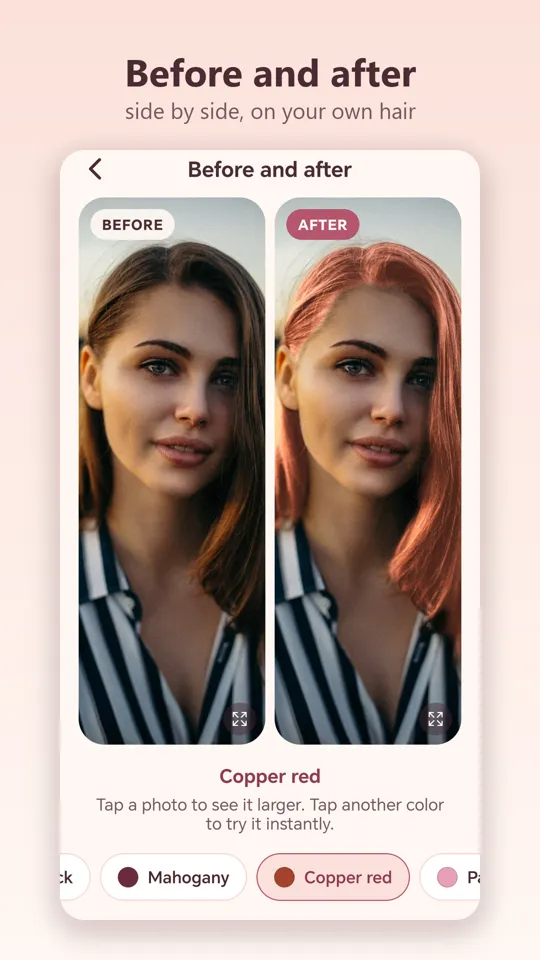
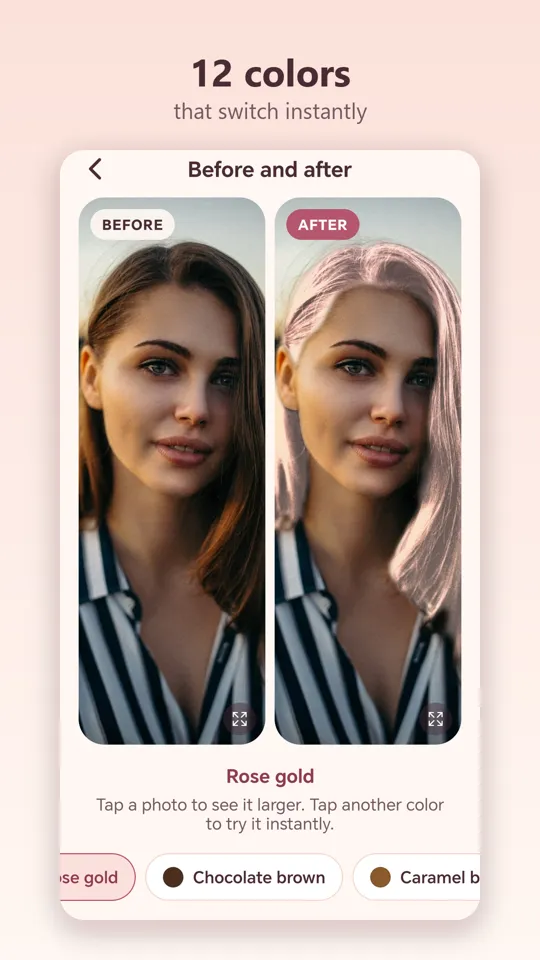
LookAI has 12 colors, from platinum blonde to midnight blue, and shows before and after side by side. It's free and your photo never leaves your phone.
Get it on Google Play
Frequently asked questions
How do I know if my skin is warm, cool or neutral? Look at the veins on your wrist in natural light: greenish veins usually mean a warm undertone, blue or purple veins a cool one, and a mix of both suggests neutral. Checking whether gold or silver jewelry flatters you more also helps.
What hair color looks good on olive or tan skin? Olive and tan skin often looks great with chocolate brown, caramel and honey balayage, mahogany and black with soft highlights. Very light blondes can work too, but try them first.
What hair color suits very fair skin? It depends on the undertone. Cool fair skin tends to suit platinum, ash and pastel pink; warm fair skin tends to suit honey blonde, copper and golden light brown.
Can I find out which color suits me without dyeing my hair? Yes. With a hair color try-on app like LookAI you can apply several shades to your selfie and compare them with your original photo before you decide.
General color and style guidance. Before dyeing, talk to a professional, especially if you have a sensitive scalp or hair dye allergies.