Caramel balayage: what it is and who it suits
If you want light in your hair without changing your whole color, caramel balayage is one of the most requested options. It gives a sun-kissed effect: natural, soft and low maintenance. But before you book, it helps to know what it is, who it flatters and what to expect.
This guide explains it without jargon and shows you how to try it on your photo before the salon.
What balayage is
"Balayage" is French for "sweeping." In this method, the stylist paints strands freehand, without foil, sweeping the product more heavily toward the ends and lightly toward the roots. The result is a gradient with no hard line at the root.
It differs from classic highlights, which are more uniform and start closer to the root, and from an all-over dye, which changes all of your hair.
Why caramel is so popular
Caramel sits between brown and blonde: warm and golden. It works because:
- It looks natural: like what the sun would do to your hair.
- It brightens the face without the demands of a light blonde.
- It blends with your base color: you don't have to give up your brown.
Who it suits
- Brown or dark brown hair: the ideal base. Caramel blends in and adds dimension.
- Warm undertones, medium and olive skin: golds flatter them especially. Find yours in what hair color suits your skin tone.
- Black hair: it can be done, but needs more lightening and maybe more than one session. See hair colors for black hair.
- Blonde or very light hair: caramel works as a deeper tone that adds contrast.
If your skin is very fair and cool, a very golden caramel can bring out redness; ask for a softer, more "beige" shade.
How the salon process works
- Consultation: bring reference photos and show your current color. Ask how much it will lighten your hair.
- Partial lightening: the stylist paints strands with lightener, more toward the mid-lengths and ends.
- Toning: a caramel or honey tone is applied to cancel orange and set the color.
- Treatment and styling: a conditioning treatment to repair, then a finish.
It usually takes 2 to 4 hours, depending on length and starting color.
How long it lasts and what upkeep it needs
- Lasting power: since it doesn't reach the root, growth doesn't show. Many people go 3 to 6 months between touch-ups.
- Home care: sulfate-free shampoo, a hydrating mask and a toner or gloss now and then so the tone doesn't turn brassy.
- Protection: sun and chlorine lighten and dry hair; use heat protectant and sun protection.
Damage: what to expect
Balayage lightens only some strands, so it damages less than an all-over light dye. It still involves partial bleaching. If your hair is very dry or brittle, hydrate it for a few weeks first and talk to your stylist.
Try it on your photo before you decide
- Take a front-facing selfie in natural light with your hair down. Here's how to do it well.
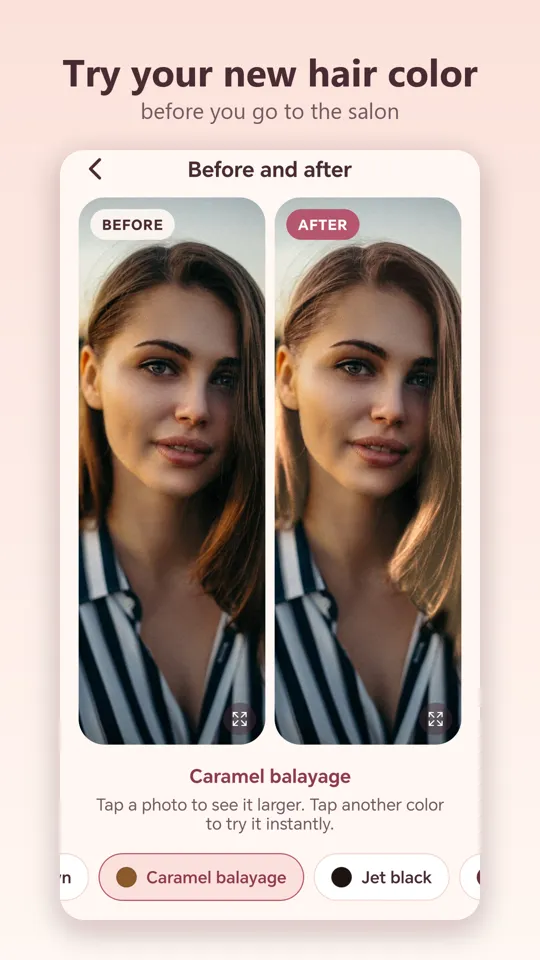
- Try the caramel balayage and compare it with chocolate and copper.
- Look at before and after, and save your favorite to bring to the salon.
If you're torn between caramel, blonde or copper, read blonde, brown or red: how to choose without regrets. LookAI shows an approximate preview: the real result depends on your hair and your stylist.
LookAI shows before and after side by side, with 12 colors to compare. It's free and your photo never leaves your phone.
Get it on Google Play
Frequently asked questions
What is caramel balayage? It's a coloring technique where the stylist hand-paints strands in caramel and honey tones, mostly toward the mid-lengths and ends, for a soft, natural gradient with no hard line at the root.
Who does caramel balayage suit? Almost anyone with brown or dark brown hair, especially warm undertones and medium to olive skin. It can also be done on black or very light hair by adjusting the shade.
How often does balayage need touching up? It's low maintenance: since it doesn't reach the root, it often lasts 3 to 6 months between touch-ups, with a toner or gloss now and then to keep the tone.
Does balayage damage hair? It lightens only some strands, so it's gentler than an all-over dye, but it does involve partial bleaching. Good care and hydration help keep hair healthy.
General color and style guidance. Before bleaching or dyeing, talk to a professional, especially if you have a sensitive scalp or hair dye allergies.