Foods That Raise Cholesterol: 10 Everyday and Latin Foods High in Saturated Fat
Your blood test came back with high cholesterol and now everyone says "cut the fat." But which fat? And how much? What raises bad (LDL) cholesterol most isn't so much the cholesterol in food, but saturated fat, and it shows up in many meals we eat every week.
Here is how much saturated fat is recommended per day, 10 everyday and Latin foods with more of it than you think, and simple choices on your plate to notice it and eat more balanced.
How much saturated fat per day?
- In general: under 10% of daily calories, about 20 g if you eat around 2,000 calories.
- With high cholesterol: many guidelines recommend less, around 13 g a day. Your doctor will set your goal.
For perspective: one serving of pork rinds can take half of the whole day.
10 foods with more saturated fat than you think
Approximate values per typical serving. They vary by cut, brand and preparation:
| Food | Serving | Approx. saturated fat |
|---|---|---|
| Double cheeseburger | 1 | 20–25 g |
| Pork ribs | 1 serving (7 oz) | 10–14 g |
| Pork rinds (chicharrón) | 1 serving (2 oz) | 8–10 g |
| Pizza | 2 slices | 9–12 g |
| Chorizo | 1 link | 6–8 g |
| Fried chicken with skin | 2 pieces | 6–8 g |
| Coconut rice | 1 cup | 6–10 g |
| Butter | 1 tablespoon | 7 g |
| White or yellow cheese | 1 thick slice (1 oz) | 5–6 g |
| Fried empanadas | 2 medium | 4–8 g |
A breakfast of eggs with chorizo and cheese, fried chicken with the skin for lunch and pizza for dinner can pass 30 g in one day: more than double the recommendation with high cholesterol.
What it looks like on a real plate
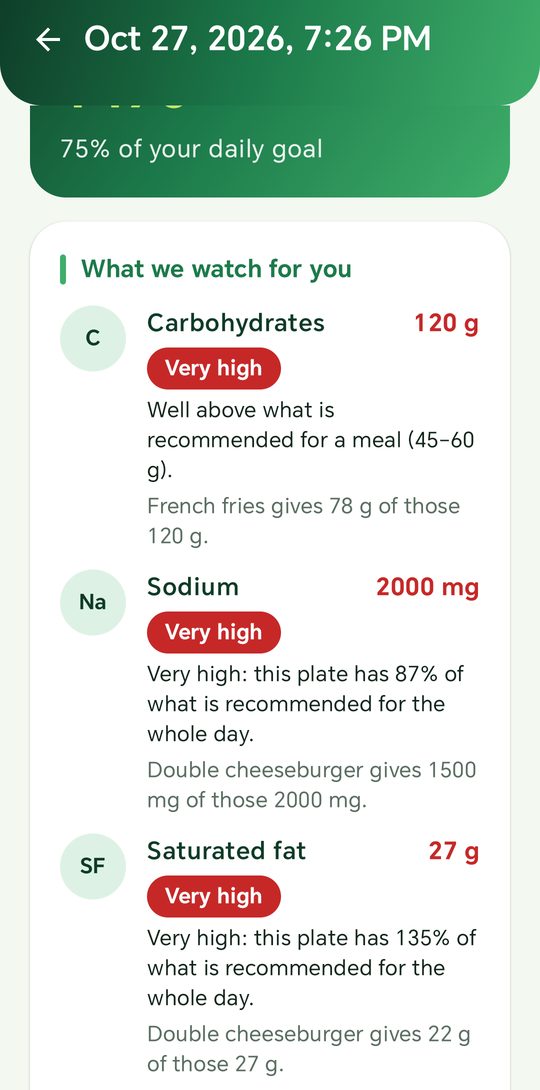
This double cheeseburger with fries, analyzed with Balancia, has 27 g of saturated fat: 135% of the recommended amount for the whole day, in one meal. And the app shows where it comes from: the burger adds 22 g.
Choices on your plate for less saturated fat
You don't have to give up the food you love. What helps most is what you pick and how much you serve yourself:
- Leave the chicken skin aside. That's where much of the saturated fat is.
- One fatty meat per meal. If there is chorizo or pork rinds, keep it a small portion and don't double up.
- Cheese as a small side, not the star. A thin slice instead of a thick one.
- When eating out, pick grilled, roasted or boiled over fried or breaded.
- Fill the plate with beans, lentils, salad or fruit. They fill you up and bring fiber, which helps with cholesterol.
- Fast food once in a while. One double cheeseburger can go over a full day's recommendation.
What about eggs?
Eggs have cholesterol, but for most people the cholesterol in food matters less than saturated fat. Many people can eat them in moderation. What usually adds up most is what comes with them: chorizo, sausage, cheese or butter. Check your case with your doctor.
Related guides
- High-sodium foods to watch with high blood pressure
- Arroz con pollo carbs and calories
- How to calculate carbs in a meal
Balancia estimates saturated fat, cholesterol, sodium and carbs for every meal from a photo, and shows which food adds the most. Made for people watching cholesterol, blood pressure or diabetes. Your history stays on your phone.
See Balancia on Google Play
Frequently asked questions
Which foods raise cholesterol the most? Mostly foods high in saturated fat: fatty meats and their skin, pork rinds, processed meats, cheese, butter, cream, fried food, fast food and products with coconut or palm oil.
How much saturated fat per day? About 20 grams on a 2,000-calorie diet as a general reference. With high cholesterol, many guidelines recommend around 13 grams; your doctor will set your goal.
Can I eat eggs with high cholesterol? In general, the cholesterol in food matters less than saturated fat. Many people can eat eggs in moderation; check your case with your doctor.
How can I know how much saturated fat my meal has? Check the label on packaged food. For your plate, an app like Balancia estimates it from a photo and shows which food adds the most.
For information only. Values are approximate and do not replace advice from your doctor or dietitian. Balancia gives approximate estimates and does not diagnose or treat any disease.