How to Calculate Carbs in a Meal (By Hand or From a Photo)
If you have diabetes or prediabetes, you have probably been told to "count your carbs." That sounds simple until you are looking at a homemade plate of rice and chicken, a stack of tortillas or a bowl of soup with no label and no measuring cup. How many grams is that? Is it a lot, or normal?
This guide shows you how to calculate the carbs in a meal by hand, how to serve a balanced plate without counting, and how to get the number in seconds from a photo. We use examples of the food people actually eat at home, including Latin dishes.
Why counting carbs matters
Carbohydrates (rice, tortillas, bread, potatoes, plantains, fruit, juice and sweets) are what raise blood sugar the most after a meal. You don't have to cut them out: they are energy, and many bring fiber. What helps is knowing how much you eat at each meal and spreading it through the day instead of loading it into one plate.
A common reference for adults with diabetes is 45 to 60 grams of carbs per main meal. It is only a starting point: the right amount for you depends on your treatment, weight and activity, so check it with your doctor or dietitian.
Method 1: calculate it by hand, step by step
- Split the plate into foods. Rice, chicken and salad are three foods. Almost all the carbs will be in the rice.
- Estimate each portion. Cups and pieces are easiest. A dinner plate is about 10 inches wide: if the rice covers a quarter of it and is piled up, it is often around one cup.
- Look up the carbs per portion. On the package's Nutrition Facts label if it has one, or in a table like the one below.
- Add them up. That total is your meal's carbs.
Approximate values for common cooked foods:
| Food | Portion | Approx. carbs |
|---|---|---|
| White rice | 1 cup | 45 g |
| Beans or lentils | ½ cup | 20 g |
| Corn tortilla | 1 medium | 12 g |
| White bread | 1 slice | 13–15 g |
| Boiled potato | 1 medium | 30 g |
| French fries | 1 large serving | 60–80 g |
| Chicken, beef, fish, eggs | any portion | almost 0 g |
| Lettuce and tomato salad | 1 cup | 3–5 g |
Example: 1½ cups of rice (about 68 g) + ½ cup of beans (20 g) + chicken (0 g) + salad (4 g) = about 92 g of carbs. That is nearly double a meal's reference, and almost all of it comes from the rice.
Method 2: serve without counting (the plate method)
If counting grams wears you out, the plate method is a good everyday guide:
- Half the plate: non-starchy vegetables (salad, broccoli, cucumber, tomato, green beans).
- A quarter: protein (chicken, fish, lean meat, eggs).
- A quarter: carbs (rice, tortillas, potatoes, plantains, yuca or bread).
In many Latin and American plates, the rice or fries take up half the plate or more. Cutting them to a quarter and filling the rest with vegetables is often the single change that helps most.
Method 3: from a photo of your plate
This is what Balancia does: you take a photo of your plate and, in a few seconds, it tells you which foods it sees, how much of each, and the carbs, sodium and fat in the meal.
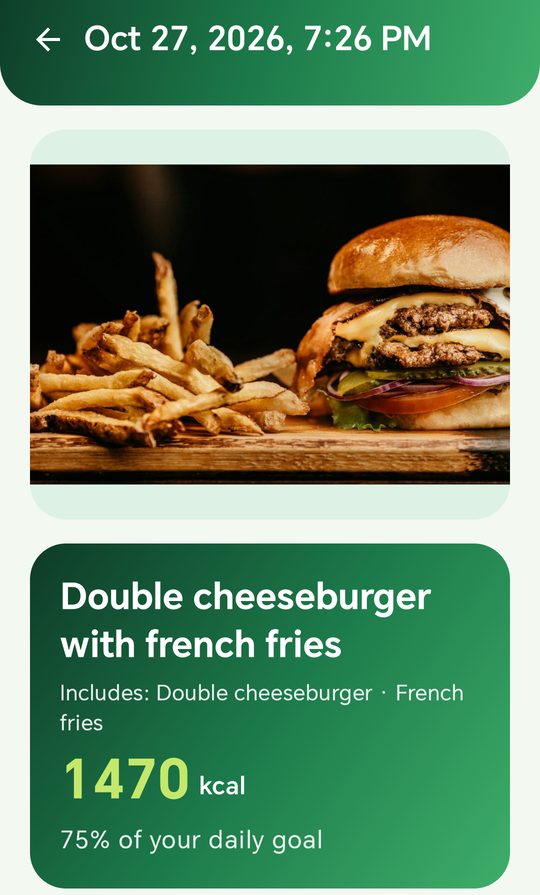
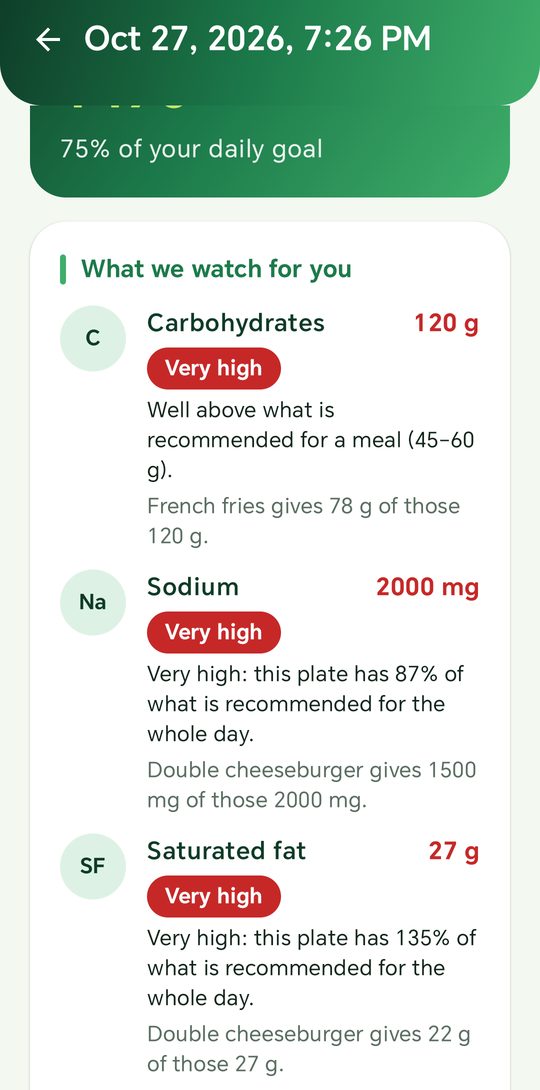
If you tell the app you have diabetes, it highlights carbs: it marks them Normal, High or Very high for one meal, and tells you which food adds the most.
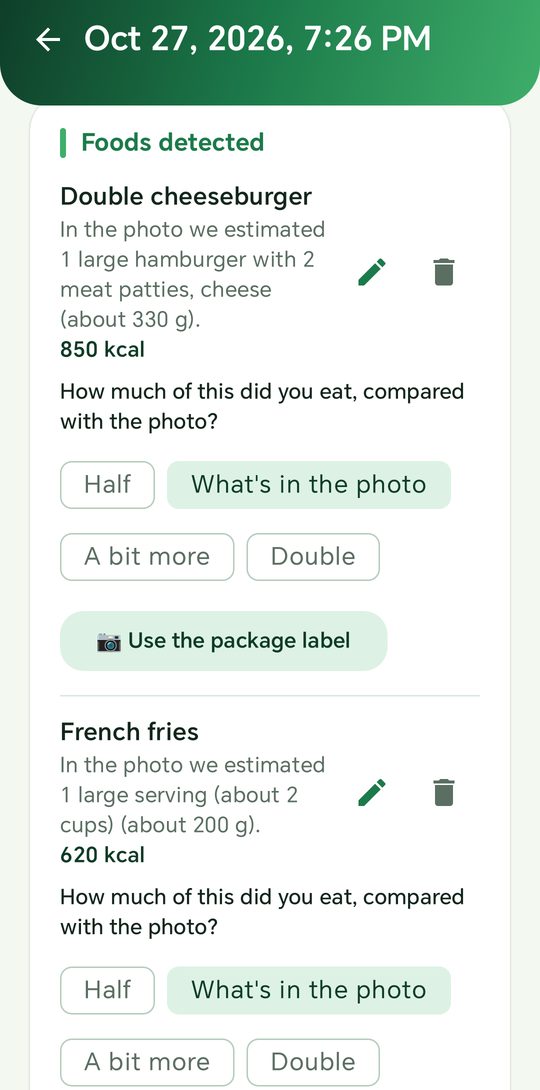
Because a photo is not a scale, you can adjust what you ate ("half", "a bit more", "double") or fix a food with the pencil if the app got it wrong. For packaged foods like bread or cookies, you can snap the Nutrition Facts label to use the package's exact values.
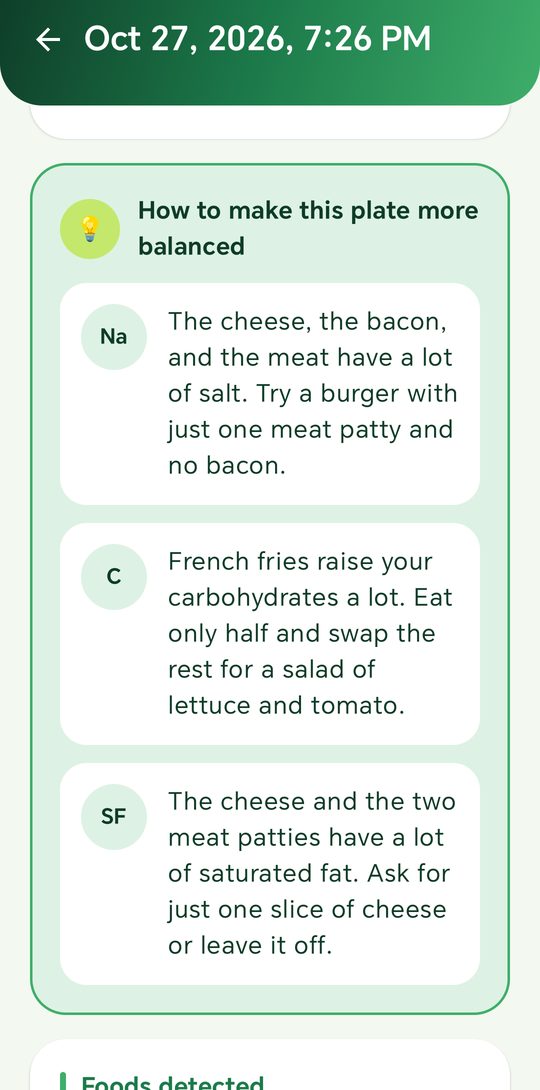
Finally, the app gives you simple ideas to balance that same plate, with no impossible diets:
Common carb-counting mistakes
- Forgetting drinks. Juice, soda and sweetened coffee add up fast.
- Underestimating rice or fries. Home and restaurant servings are usually bigger than one cup.
- Counting only the main dish and forgetting the bread, crackers or dessert.
- Trying to cut all carbs. You don't need to: what matters is the portion and how you spread it through the day.
Related guides
- Foods that raise cholesterol
- High-sodium foods to watch with high blood pressure
- Arroz con pollo carbs and calories
More guides on the Balancia guides page.
Balancia shows the carbs, sodium and fat in every meal, depending on whether you watch diabetes, blood pressure or cholesterol. It works in English and Spanish, understands Latin home cooking, and your history stays on your phone.
See Balancia on Google Play
Frequently asked questions
How many carbs per meal are recommended? A common reference for adults with diabetes is 45 to 60 grams per main meal, but the right amount for you depends on your treatment and activity, so ask your doctor or dietitian.
How many carbs are in a cup of rice? A cup of cooked white rice has about 45 grams of carbs, roughly 28 grams per 100 grams. That is almost a whole meal's reference on its own.
Can an app count carbs from a photo? Yes, approximately. An app like Balancia recognizes the foods on your plate, estimates the portion and calculates the carbs. Adjust the portion if you ate more or less, and use the package label for packaged foods.
What is the plate method? A way to serve without counting: half the plate non-starchy vegetables, a quarter protein and a quarter carbs.
For information only. Values are approximate and do not replace advice from your doctor or dietitian. Balancia gives approximate estimates and does not diagnose or treat any disease.